Showing posts with label SDS. Show all posts

Friday, December 31, 2021

A few things that made my 2021 interesting..

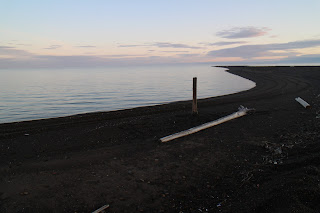
Two Arctic seas meeting, a late midnight
2021 is still a pandemic year that often felt like 2020. However, overall, the year was more positive. It was not better than my pre-pandemic best years (2019, 2017, 2015, and 2013). But this post focuses on the happy moments.

1. The Alaskan Arctic, twice - in the peak summer and the peak winter!

Witnessed the Arctic transforming completely with seasons from 24 hours sunlight to no sunrise. Visit Alaska was my childhood dream since 2001. After two decades, visited twice this year, and experienced the taiga and tundra biomes of Alaska.

2. A "Polar Bear Plunge" in the Northernmost Point of Alaska in the North Slope Borough

On a fine summer day, I jumped into the Arctic Ocean at Point Barrow (Nuvuk), where the Chukchi sea meets the Beaufort Sea. Nuvuk and Utqiagvik are now the northernmost and westernmost points I have ever been to. The water was not as cold as I anticipated. But I had to dry myself quickly and put my layers of clothes back on - as outside air in Utqiagvik was cold even in the peak summer, and water on skin makes it feel colder.

3. Witnessing Northern Lights two nights consecutively!

On New Year's Eve and the night of Jan 1st, 2022. The NYE had a magical feeling to it.
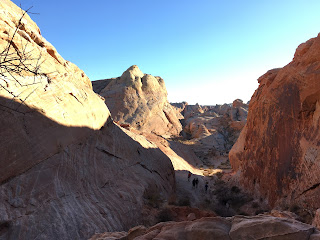
Valley of Fire State Park, NV

4.  Exploring the culinary scene of Northern Virginia (NOVA).

A calm Uzbek restaurant in Arlington and a seafood restaurant in Alexandria.

5. Getting stuck in Fairbanks in a historical "Icemageddon."

Canceled and delayed flights lengthened my stay from 4 nights to 6 nights. I handled an extremely volatile itinerary elegantly.

6. Long walks on cold Arctic winter temperatures of -34C, feels like -40C.

The weather app warned frostbites to exposed skin in 2 minutes and asked not to go outdoors. I did. I got a frostnip on my left thumb once too. 

7. Spencer Glacier and the blue glaciers of Whittier and surroundings

A scenic hike and standing in Spencer glaciers, and short walks in Whittier.

8. The view from Mount Evans, high at 4,348 m elevation

It is the highest I have ever been. And the scenic drive with mountain goats in the streets.

9. Arriving at Las Vegas, NV via long dark streets from Kanab, UT 

Slushies in Las Vegas was the weakest alcohol I have ever tried. 

10. The desert landscapes of NV and CA

Licked (!! because, why not?) some salt from the lowest elevations (-86 m) of death valley, and some hikes in the valley of fire, Joshua tree, and Mojave parks and forests.

11. The French Quarter of New Orleans

It has this genuine European charm and nightlife that I haven't felt elsewhere in the USA.
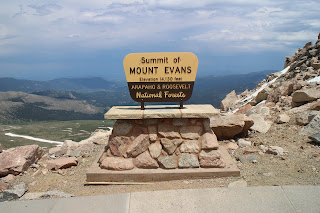
Mount Evans, a Fourteener of CO.
12. Witnessing the bore tides in real-time from the train ride

From Anchorage towards the south, magnificent views of mudflats and glacier-covered mountains of Chugach National Forest.

13. 20 km frequent weekend walks in Atlanta Beltline west and south and Stone mountain trail

More explorations of South and West Atlanta; leisure walks in roadsides of various neighborhoods such as Edgewood, Cabbage town,  and College Park; and interesting mini hikes such as Doll's Head Trail/Constitution Lakes Park.

14. Disconnecting from the world in Charlotte.

Long weekend brief trips are fun. I liked the 7th Street Public Market.

15. EmoryBMI Google Summer of Code - a successful summer as a mentor for two projects and the org admin

Our sister organization caMicroscope had a productive summer too, I learned from their mentors. 

16. The 2 Pfizer shots and the Moderna booster

They gave hope for a year that overwhelmingly felt like a twin of depressing 2020.
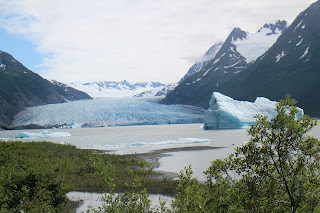
Spencer Glacier in summer
17. Crossing the bridge to Camden, NJ from Philadelphia, PA.

Almost summer - but it was rainy and cold. Thankfully, Philly had some nice cafes.

18. Getting soaked in a heavy thunderstorm in Bonita Lakes Park in Meridian, MS.

The town has some ghost vibes, like a haunted town. I won't recommend walking alone there at nights. It is a ghost paradise.

19. Burgers and CBD water outside the Illegal Burger restaurant, Denver downtown
Met some interesting strangers in Denver/Colfax, Idaho Springs, Boulder, and Littleton.

20. Accepted journal papers - a productive year for research.

Niffler at Journal of Digital Imaging (JDI), NEXUS at IEEE Access, and Viseu at Elsevier Computer Networks (COMNET).

21. Regular dentist visits after a decade. It was expensive.

Since I did not spend considerable time with humans this year, my dentist became the person I most interacted with this year.

22. Exploring Washington DC with my former colleague.

It reminded our Atlanta walks pre-pandemic in 2020.
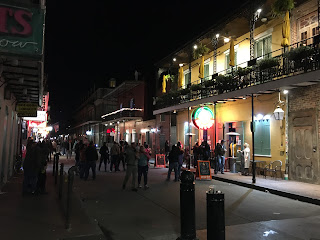
New Orleans French Quarter
23. Discovering Chungha's music and becoming a fan.

INNA, my all-time favorite since 2013 from Romania, also had some great music this year.

24. A colorful view from the apartment in central Portland.

It was a trip-inside-a-trip from Seattle in a serial trip. In such backpacking trips, especially including flights, packing-unpacking-and-repacking, ensuring not to mix the still-clean clothes with dirty/used ones, is an art.

25. Up and downhills of Seattle on rainy Thanksgiving days.

The Chinatown / International District was nice for a good walk, despite the bad weather.

26. Software-Defined Systems SDS 2021 Conference.

Nice to meet my peers, although it was virtual. I was also the technical program committee (TPC) chair.

27. Snow covered Christmas Eve in Anchorage

This was my first white Christmas, everything covered in heaps of snow and snowflakes falling occasionally. Loved that feeling. I used icicles to write Happy New Year on snow. 2021 was easily my most favorite and unique Christmas.
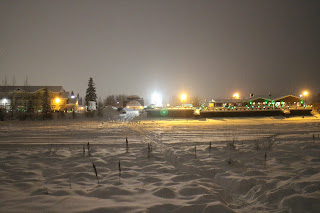
Walking across the frozen Chena River
28. Crossing Chena River on foot from Pike's Landing, College, AK.

To get a selfie with the "Love Alaska" sign on Christmas day. In the winter, this "path" is also known as "Ice Bridge" but becomes an actively flowing river when it gets warmer in spring to autumn.

29. Reading a book outside in the snow by the fireside in Fairbanks.

Thanks to the hotel's library and the beautiful view that the snow had crafted.

30. Dangerously slippery roads of downtown Fairbanks

Walked across the entire downtown Fairbanks on various types of snow, ice, and slush - The good traction for my long boots prevented me from slipping on the heaps of snow with ice layers.

Every year, I have one new year's resolution - to outperform my previous years. :) 2021 was not a bad year, and comparing it with my pre-pandemic years is unfair. It was better than 2020, and it was the best I could achieve solo in a pandemic. I expect 2022 to bring an end to this crisis and bring back happiness to the 2019 pre-pandemic level. I wish you a happy new year. Thanks for reading my list until the end. You may read the blog posts of all the previous years as well.

Wednesday, July 1, 2020

[SDS 2020] Latency-Sensitive Web Service Workflows: A Case for a Software-Defined Internet

July 2nd: Today the Seventh International Conference on Software Defined Systems (SDS) went virtual. I had to present my paper "Latency-Sensitive Web Service Workflows: A Case for a Software-Defined Internet" in Paris at this conference. But, due to COVID19, we all uploaded the presentations with audio recordings. The sessions were asynchronous. But the keynotes were live, followed by Q&A. Due to this approach, the conference lasted only one morning 8 am - 1 pm Atlanta time (1 - 6 pm Paris time). The keynotes went on for 8 - 12 followed by an hour-long discussion with all the participants. This additional hour allowed us to network. However, we all noted that it cannot replace the physical networking that we usually have at the SDS conferences.

This is the last paper of my Ph.D. research. My Ph.D. was indeed an interesting 5 years of my life!

Abstract — The Internet, at large, remains under the control of service providers and autonomous systems. The Internet of Things (IoT) and edge computing provide an increasing demand and potential for more user control for their web service workflows. Network Softwarization revolutionizes the network landscape in various stages, from building, incrementally deploying, and maintaining the environment. Software-Defined Networking (SDN) and Network Functions Virtualization (NFV) are two core tenets of network softwarization. SDN offers a logically centralized control plane by abstracting away the control of the network devices in the data plane. NFV virtualizes dedicated hardware middleboxes and deploys them on top of servers and data centers as network functions. Thus, network softwarization enables efficient management of the system by enhancing its control and improving the reusability of the network services. In this work, we propose our vision for a Software-Defined Internet (SDI) for latency-sensitive web service workflows. SDI extends network softwarization to the Internet-scale, to enable a latency-aware user workflow execution on the Internet.

Sunday, June 21, 2020

Remote conferences - Conferences during the COVID19 Era

Lisboa, 2013 NY, and my Zoom background
COVID19 has made the conferences go remote. Some conferences, such as SDS 2020, were postponed in the hope that COVID19 will end soon. But eventually, COVID19 became a deadly pandemic that no conference could survive. Some conferences, such as DisCoTec 2020 became free to attend for any participants while charging the authors a negligible fee. Other conferences offered discounted rates, such as 50%. For those who have already paid the full registration fees, refunds for the overpayment were issued.

DisCoTec used the Zoom webinar for the conference. Unlike a Zoom meeting that lets you see and listen to every participant, Zoom webinar gives a monologue-kind of environment. Most, if not all, presenters had recorded their presentation as videos. It is similar to the SDS 2020 presentation that I am supposed to give by the end of June. We all have recorded PowerPoint presentations with our voice over and uploaded them as videos for the conference. DisCoTec had a similar approach, with the videos uploaded to YouTube, unlisted. I mostly attended the tutorials (Monday), and DAIS sessions (Tuesday - Thursday). I skipped the workshops (Friday).

There are several advantages in conferences going remote. First, remote online conferences let us continue conferences as usual, without giving up. Now the options are: remote conferences or postpone or cancel the conference. With the pandemic still going strong, postponing does not seem to work. That leaves us with either no conference for 2020 or a remote conference. Something is better than nothing! So remote conferences, it is. Second, they open up the conferences to a wider community - those who couldn't travel to conferences due to funding and visa limitations. Now, with less funding, we could join more conferences. OK, these advantages are quite obvious.

Now, let's look into the shortcomings of a remote conference, done in the DisCoTec way.

1. No scientific interaction between participants

Following the recorded presentations, there were live Q&A sessions that lasted up to 5 minutes. But, mostly, it was just listening to recordings. With time, I am sure the conference will list those uploads, making it possible for everyone to go and watch them on YouTube, on-demand. To incentivize attending to the conference session remotely, conferences must put additional efforts, beyond the Q&A. Otherwise, I may just watch them at leisure, and send my questions as emails to the authors.

Of course, the conference organizers created a slack channel (on Tuesday) for questions and answers from the sessions. Each conference session had its room. DisCoTec is an umbrella event with a parallel conference (including DAIS) and workshop sessions. So it had several rooms in the Slack channel with one general channel. 

2. No coffee-hour friendships and networking

One thing I usually love about conferences is the coffee hour discussions. We meet the presenter and ask questions or compliment their work. I am an extrovert when it comes to conferences. I roam around with a cup of coffee during the coffee breaks. I go and introduce myself to any lone participant and discuss their work. Penetrating an already existing group is harder. Sometimes, participants from the same university, company, or friends from the same country make a group and stick to each other. I always avoid that. Such groups usually appear less open to make new friends. On the other hand, I have always made friends with diverse groups that were formed on the spot. I have made groups at conferences, by joining several participants over the coffee hours. Then we all go for dinner or sightseeing together. The best of the conferences, indeed!

3. Less opportunity to find long-term collaborators

Conferences are an excellent opportunity to find long-term collaborators and even employers! During IC2E/SDS conference, I met my supervisor from Croatia for the first time. She had attended my presentation and found that her research aligned with my on-going Ph.D. research (which was still in its infancy). That's how I ended up in Croatia, spending a summer in a short-term scientific mission (STSM)! That STSM contributed to the core of my Ph.D. research. Such fruitful interactions won't happen easily in online conferences. At least not in this format. I tried to interact with participants on Twitter via the hashtags. But not much luck except for some minor chats. The potential to meet collaborators is highly limited in remote conferences such as this and almost non-existent for the audience. I hope that at least presenters got some visibility and interaction beyond the Q&A. Communications with potential future collaborators are the key motivation for conferences. Otherwise, I would rather publish my work in a journal instead. In fact, journals are even valued highly in academia. So there must be more incentives to submit and present our papers in conferences when the advantage of meeting researchers physically is no more.

4. Timezone differences

The timezone difference is the biggest challenge, even for an introvert who doesn't like to network with random researchers. The conference was in Malta timezone, as it was originally scheduled to be in Malta. So for the 10:00 - 18:30 sessions, I had to wake up early in the morning, as it is 4:00 - 12:30 in Atlanta time. I was planning to sleep early and wake up early. But I also had other work meetings, and I could not escape my work duties for the week. Hence, I ended up having to spend most of the week without proper sleep. I went to bed at regular times and woke up as early as 4 a.m. Given a chance, I would go to bed earlier and adjust my timing to the conference timezone, including the meal hours. That would have made me virtually travel to Malta!

Although when we travel to conferences, I still end up with little sleep - as I have to prepare my presentations and try to find some time to explore the city. I am used to timezone shifts. But the last week was like double work since I had the conference sessions followed by my regular work hours. If the conference sessions were held at Atlanta time, of course, I would have to sacrifice one of the two - either the work for the week or the conference.

Can we do better?

Yes. My university in Portugal (IST/Instituto Superior Técnico, Universidade de Lisboa) is hosting remote seminars on Mathematics, Physics & Machine Learning weekly. I joined the session on "Learning from Distributed Datasets: An introduction with two examples" last week. It was interactive. The session was hosted in a Zoom meeting. So the participants were able to see each other and even interact with the presenters before the event. It was nice to introduce myself to my ex-colleagues remotely. It was my first IST seminar after two years. Also, it is my first remote IST seminar ever. These online open seminars are one good thing that happened out of the pandemic. The recordings are, of course, available to watch later.

So in my opinion, such Zoom meetings that allow the participants to see and interact with each other before the sessions and during the "virtual coffee breaks" is a better option. Of course, zoombombing will be an issue. Password-protected conference zoom meetings can fix that.

The current move towards online conferences to combat COVID-19 travel limitations is a welcome move. However, it is not sure how long this will last. It will depend on the COVID-19 as well as the associated travel restrictions. The conference committees should take extra measures to make the conferences more interactive, to encourage communications between the participants and networking, rather than merely playing the recorded videos followed by a customary Q&A. This is new to all of us. So, of course, this is going to take a lot of iterations. Moreover, I empathize with all the conference organizers. They all have made tremendous efforts to organize the conferences physically. But they had to cancel their plans and again prepare for the online conferences.

Now CoopIS 2020 has gone online. It is one of the conferences I have presented in the past (I had papers there in 2015 and 2016). I am looking forward to attending more remote conferences whenever the topic is relevant to me, as long as the registration is free for the participants. I am yet not sure whether paying the registration fee is justified for a remote session, unless my paper is published in the conference.

Wednesday, July 10, 2019

My Ph.D. Defense - Software-Defined Systems for Network-Aware Service Composition and Workflow Placement

I successfully defended my Ph.D. thesis at IST (Tecnico) - ULisboa, Lisbon, Portugal on the 1st of July 2019. I passed with a distinction. My presentation slides and the abstract are given below.


Composing complex workflows efficiently from diverse services on the Internet requires communication and coordination across heterogeneous execution environments, ranging from data centers and clouds to the edge managed by different infrastructure providers. Through complete virtualization of network and its services, network softwarization provides efficient management of network architecture. This dissertation exploits the flexibility and management benefits of the network softwarization to solve the problems of service composition and workflow placement at Internet scale. We present two main contributions: first, a set of extensions to network softwarization to simplify and enhance application development and deployment, and second, a scalable architecture to compose service chains in wide area networks. Finally, we evaluate these contributions in the context of big data applications. We thus intend to mitigate the challenges concerning resource management and interoperability of heterogeneous infrastructures, to efficiently compose and schedule various service workflows at Internet scale, while sharing the network and the computing resources among several users.

Network Softwarization revolutionizes the network landscape in various stages, from building, incrementally deploying, and maintaining the environment. Software-Defined Networking (SDN) and Network Functions Virtualization (NFV) are two core tenets of network softwarization. SDN offers a logically centralized control plane by abstracting away the control of the network devices in the data plane. NFV virtualizes dedicated hardware middleboxes and deploys them on top of servers and data centers as network functions. Despite its growing application, network softwarization has not been fully exploited for effectively composing service workflows of multiple users sharing third-party network infrastructures and services. To this end, we propose our contributions to extend network softwarization for network-aware service composition and workflow placement in heterogeneous infrastructures.

First, we separate network from infrastructure by exploiting network softwarization to move out of data centers toward the edge seamlessly, and from simulations to actual deployments, with little or no additional development effort. We extend SDN in cloud and data center environments to unify various phases of development, by uniformly managing the executions of the network applications from an extended SDN controller, regardless of the execution environment and phase. We thus deploy the workloads seamlessly across the phases, from simulations and emulations to physical deployment environments. We further extend this work to support multiple Service Level Agreements (SLAs) across diverse network flows in data centers, by selectively enforcing redundancy on the network flows. Thus, we aim for Quality of Service (QoS) and efficient resource provisioning, while adhering to user policies. Finally, we design a cloud-assisted overlay network, as a latency-aware virtual connectivity provider. Consequently, we propose cost-efficient data transfers and workflow executions at Internet scale.

Second, we propose a scalable architecture to compose service chains in wide area networks efficiently. We exploit SDN and Message-Oriented Middleware (MOM) for a logically centralized composition and execution of service workflows. We thus propose a Software-Defined Service Composition (SDSC) framework for web service compositions, Network Service Chains (NSCs), and a network-aware execution of data services. We further present Software-Defined Systems (SDS) consisting of virtual network allocation strategies for multi-tenant service executions in large-scale networks comprised of multiple domains.

Finally, we investigate how our proposed SDS can operate efficiently for real-world application scenarios of heterogeneous infrastructures. While traditionally web services are built following standards and best practices such as Web Services Description Language (WSDL), network services and data services offered by different service providers often fall short in providing common Application Programming Interfaces (APIs), thus resulting in vendor lock-in. We look into facilitating interoperability across service implementations and deployments, to enable seamless workflow executions and service migrations. We propose big data applications and smart environments such as Cyber-Physical Systems (CPS) and the Internet of Things (IoT) as our two application scenarios. We thus build CPS and big data applications as composable service chains, offering them an interoperable execution.

Our research contributions highlight that network softwarization can be used to build and deploy network applications with minimal repetitive effort, from initial design and development stages to production. Evaluations on the proposed SDS demonstrate performance and economic benefits to service composition and workflow placement at various scales, from data centers to the Internet. By managing and leveraging redundancy in the network flows and network paths, our SDS prototypes ensure that SLAs are met in the critical network flows of multi-tenant systems. Furthermore, our SDS framework reduces Internet latency by up to 30%, yet in an economic approach. Finally, we elaborate the broader applicability of our proposed SDS by extending it to CPS and big data applications.

Friday, December 28, 2018

A few things that made my 2018 interesting..

A day in Monaco
2018 is one of my most favorite years. It gave me lots of happy moments. Adhering to the habit I started in 2012, this post summarizes 30 things that made my 2018 interesting.

1. Submitting my Ph.D. thesis
I planned to defend by 2018 October. But it got delayed, and I will defend early next year. However, I have submitted the thesis, and my Ph.D. research is complete. :)

2. Return to Emory University, Atlanta
Emory BMI for a longer stint after my previous short one in 2016. Everything felt the same and different at the same time.

3. A day in Monaco, walking across the entire country
It is trivial to walk across a country if it is as small as Monaco. :)

4. The conclusion of Ph.D. collaborations
It is important to conclude the collaborations on a positive note. As my Ph.D. nears the end, I am happy that my collaborations from URijeka (SDSC) and KAUST (NetUber and Dynam-IX) also came to successful completion.

5. Sleepless nights in Shenzhen, China
When deadlines come, you get to work wherever you are. I ended up working overnights for the successful submission of Óbidos.

6. Shopping in rainy and windy days in Jeju
I was lucky (or was that Jeju, which indeed was fortunate to receive me?). After I left Jeju, in a few months, I learned that Jeju does not offer visa-free entry to Sri Lankans anymore.

7. Best Paper Award at SDS'18
I received the best paper award at SDS'18 for my paper on Software-Defined Data Services (SDDS). It was an exciting moment.

Barcelona, once again!
8. Random Walks in Barcelona, once more!
This is a city I adore. I am getting familiar with this city more and more.

9. Cruise in Zurich Lake
Zurich was still cold in May. Of course not as cold as my last visit for the 2017 New Year's Eve. But still raining.

10. IFIP Networking 2018 with an overdose of caffeine
IFIP is a conference I always wanted to participate. Had the chance to present NetUber there this year, finally.

11. Spending a whole day in Sesimbra Beach
Sesimbra is a beach town close to Lisboa in the Setúbal district. I always wanted to go there. I got the chance finally this year.

12. First journal papers and book chapters of my Ph.D.
I started working on 3 journal papers (Évora, Óbidos, and SD-CPS) and 2 book chapters (SDN for big data and SDN for service compositions) last year. They all got accepted and published this year!

13. The views of French Riviera
Despite the predicted weather that it would be warmer than Barcelona, Nice turned out to be cloudy and colder.

14. Fresh Seafood in Jeju
Watching the show of octopus, squids, and several similar sea creatures being cooked alive for me.

15. Leaving Portugal and EU after 6 years
I don't think I will ever forget those sweet memories of Lisboa. Experiencing 'saudade', as we call it in Portugal.

16. Almada, just across the Tagus River.
Pleasant environment, but busy days.

17. Presenting my CAT at IST
I should have tried to make the IST's CAT and UCL's confirmation as a single presentation. But due to the difference in UCL and IST requirements, I chose to make 2 different presentations. With the CAT and my thesis submission, I have met all the requirements for the thesis (ABD/All But Dissertation).

18. A slow-paced year, quite the opposite of 2017
2017 was way too fast with several migrations and travels. 2018, on the other hand, was more stable and slow-paced. This was the first time during the past 6 years that we stayed home during the new year's eve. Feeling somewhat old.

19. Becoming a morning person in Atlanta
Love those early morning commutes to work while it is still dark and cold outside.

20. Hopping on to random buses in Jeju, hoping to reach the destination eventually.
Rainy days in Jeju
And we did. I even made an algorithm out of this.

21. Bus Commutes from Calçada de Carriche to my lab

My apartment was in Calçada de Carriche, a bit farther from my lab, INESC-ID Lisboa, compared to my previous neighborhoods. Therefore, needed a relatively longer bus commute.

22. Parque das Nações revamped.
Parque das Nações is my favorite spot in Lisboa. It has improved within the past few years with new restaurants, yet maintained its charm. It felt nostalgic.

23. Exploring more of greater Lisboa
Even after 6 years in Lisboa, we realized that there were a few places that we hadn't visited. This year, we visited the Loures region and its big shopping mall for the first time. 

24. Évora after 4 years
Évora has its historical significance. It is also where I was informed that I was selected to the prestigious EMJD-DC program with the grant, 4 years ago.

25. Trying to relive moments in Portugal
As we count the last days in Lisboa, we tried our best to visit our favorite places just one more time, with mixed success.
The entire botanical garden was shining in colorful lights and music during the December nights.

27. Ponce City Market, Atlanta
I like the interiors of this small-scale shopping mall, especially its food court. It gives strong memories.

28. Assembling Furniture from IKEA
IKEA furniture shopping and assembling them for the first time. A fun experience.

29. Atlanta Christkindl Market
Christmas markets are a significant part of the festival season. This market in Atlanta reminded me of the ones I experienced in EU during the past 6 years, such as, Lisbon, Stockholm, Helsinki, and Louvain-la-Neuve Christmas markets.

30. Poble Espanyol, Barcelona
An open-air museum that summarizes entire Spain. Not too big. But it was a pleasant walk with architectures and some snacks from different Spanish regions.


Every year, I have one new year's resolution - to outperform my previous year. :) I already have high expectations for 2019. I wish you a happy new year everyone. Thanks for reading my list until the end. You may also read the blog posts of all the previous years as well.

Saturday, June 30, 2018

Me and Long Flights

I enjoy watching movies on the long flights because they have English subtitles for foreign language movies. Sometimes I just fall asleep in the flight while attempting to watch a movie. :D

In 2015 I got my luggage delayed for the first time. The delay was by a day, and it was in PHX when I attended my first SDS conference. During the return trip, when I reached SJC after completing the trip, I was informed that there is a flight delay that might lead me missing my connecting flight in LAX. Hence, I was given a free shuttle ride to SFO and sent to LIS in an alternative route.

I love travels. I am not entirely sure whether I love or hate airports. When I look back, airports always left me with positive memories. But while waiting for a delayed flight, or when I had to rush for a connecting flight, it was rarely a pleasant feeling.

Tuesday, April 24, 2018

Software-Defined Data Services: Interoperable and Network-Aware Big Data Executions

Today I presented my work titled "Software-Defined Data Services: Interoperable and Network-Aware Big Data Executions" at the Fifth International Conference on Software Defined Systems (SDS), in UPC Barcelona. This is my third time in Barcelona. However, this is the first time I am on my own here without my friends, as my previous visits were for the EMDC and EMJD-DC events in 2013 and 2015. This is my 4th time attending an SDS conference consecutively. 

I have attended the SDS'17 (Valencia, Spain), SDS'16 (Berlin, Germany), and SDS'15 (Tempe, AZ, USA) before. I have only missed the first installment of SDS (SDS'14), as I was doing my MSc those days, and my topic was not related to SDS. SDS started as a workshop co-located with IC2E in 2014, and promoted as a symposium in 2016. It graduated as a conference on its own in 2017.


Abstract: Services that access or process a large volume of data are known as data services. Big data frameworks consist of diverse storage media and heterogeneous data formats. Through their service-based approach, data services offer a standardized execution model to big data frameworks. Software-Defined Networking (SDN) increases the programmability of the network, by unifying the control plane centrally, away from the distributed data plane devices. In this paper, we present Software-Defined Data Services (SDDS), extending the data services with the SDN paradigm. SDDS consists of two aspects. First, it models the big data executions as data services or big services composed of several data services. Then, it orchestrates the services centrally in an interoperable manner, by logically separating the executions from the storage. We present the design of an SDDS orchestration framework for network-aware big data executions in data centers. We then evaluate the performance of SDDS through microbenchmarks on a prototype implementation. By extending SDN beyond data centers, we can deploy SDDS in broader execution environments.


This paper received the Best Paper Award at the SDS 2018!


Please read more about this news at the INESC-ID web site.


Tuesday, January 16, 2018

UCL Ph.D. Confirmation

I presented my UCL Ph.D. Confirmation at UNINOVA in Almada. It was my first time in Almada. Almada is just across the Tagus River, which separates Lisboa from the other surrounding towns. I did not have much time to have fun, as I was preparing and rehearsing the presentation. Still had some good time in the little time I had in between.

Wednesday, May 10, 2017

SD-CPS: Taming the Challenges of Cyber-Physical Systems with a Software-Defined Approach

Today I presented my paper at SDS 2017. You may find the abstract and the presentation below.
Abstract: Cyber-Physical Systems (CPS) revolutionize various application domains with integration and interoperability of networking, computing systems, and mechanical devices. Due to its scale and variety, CPS faces a number of challenges and opens up a few research questions in terms of management, fault-tolerance, and scalability. We propose a software-defined approach inspired by Software-Defined Networking (SDN), to address the challenges for a wider CPS adoption. We thus design a middleware architecture for the correct and resilient operation of CPS, to manage and coordinate the interacting devices centrally in the cyberspace whilst not sacrificing the functionality and performance benefits inherent to a distributed execution.

Wednesday, April 6, 2016

CHIEF: Controller Farm for Clouds of Software-Defined Community Networks

This is my second presentation at IC2E. Last year also I presented my paper in SDS, and this is my second time publishing my paper at SDS. I always have had a good time at SDS. Given below is the presentation slides.


Abstract: Community networks leverage networking resources from the community itself to offer telecommunication networks for the same community. Software-Defined Networking (SDN) offers a global view of the elements composing the network. Due to its scalability, SDN paradigm has been extended for many other networks including social networks and community networks, in addition to its initial focus, traditional data center networks. This paper designs CHIEF, a networking platform for clouds of Software-Defined Community Networks. CHIEF offers a controller farm through a federation of SDN controllers, to orchestrate the multi-tenanted community network. CHIEF enables interoperable clouds of community networks by extending and deploying a federated and orchestrated cluster of SDN controllers, further enabling complimentary business functionalities such as monitoring, throttling, and metering for inter-community network clouds.

Tuesday, March 17, 2015

SDS/IC2E 2015 - An Expressive Simulator for Dynamic Network Flows

2nd IEEE International Workshop on Software Defined Systems (SDS -2015) was held at the Arizona State University Tempe Campus, USA in conjunction with 2015 IEEE International Conference on Cloud Engineering (IC2E 2015) from 09-12 March 2015. I presented my paper titled, "An Expressive Simulator for Dynamic Network Flows". The presentation slides and abstract are given below.

Abstract -
Software-defined networking (SDN) increases the network programmability, promoting an effective development of networked systems of cloud scale. As the scale of the networks and systems is growing larger and larger with time, programmability of the systems and networks is researched intensively. Many emulators are proposed and implemented to emulate large and complex networks inside a single computer, or a cluster of computers in the research lab. However, the emulators lack the ability to represent large systems such as data center networks or content delivery networks. Many of the network algorithms and design choices can also be tested for their functionality and efficiency in a simulator environment. While network emulators and simulators exist, a generic network flow simulator that is easy to program a variety of highly distributed and gigantic systems is still lacking. This paper presents xSDN , an expressive simulator for dynnamic network flows. Adhering to the principles of software-defined networking paradigm from the design, xSDN focuses to be lean, light-weight, easy to learn and configure, and efficient, that can simulate networks of a scale of million nodes within a few seconds.