Showing posts with label GSoC. Show all posts

Sunday, September 15, 2024

Google Summer of Code 2024 - Wrap up thoughts

A Successful GSoC 2024
Google Summer of Code (GSoC) 2024 came to an end this week with me filling the evaluation for the 4th (and final) contributor of our GSoC organization, Alaska. A group of open-source projects related to Alaska and crafted from Alaska. We could have named the organization "University of Alaska." However, we had interested mentors and support from other Alaskan entities, such as the state employees of Alaska and contributors from the AK Dev Alliance. So, "Alaska" is a more fitting name. The four projects' primary mentors this year were based in either Anchorage or Fairbanks, two of the populous (and popular) cities in Alaska. Given the GSoC happens in the summer, we couldn't show our mentees the true wilderness of Alaska in its blizzards and snow storms. But we did give a glimpse of the true north to our contributors. We had a great time as mentors. I am sure our mentees did too. They all did great work. We are very excited for the potential for GSoC 2025 and already polishing up project ideas, getting messages from interested contributors from across the oceans, and discussions of scaling up for more contributors/projects in 2025.

My personal story with GSoC started in 2009 with AbiWord. During those years, there was no limits on how many times one can be a contributor. So I was a contributor (we called that "GSoC students" during those days) four times. Twice (2009 and 2010) when I was an undergraduate in Sri Lanka, once (2014) when I was an MSc student in Portugal, and then the final time (2015) as a student again in Portugal when I was a PhD student. In between my stints as a student, I was also a mentor for AbiWord (2011 - 2013). During this time was my first time participating in the GSoC Mentor Summit 2011 in Googleplex. It was my first time visit to the US too! Since 2016, my role permanently shifted to being a mentor. Since 2019, I have been a mentor and an org admin, onboarding new mentors to the GSoC organizations that I am a part of.

So far my life has gone in 3 seasons: Sri Lanka (1987 - 2012), Portugal (2012 - 2019), and then Alaska. Time in Sri Lanka feels like childhood when I look back, although I was 25 when I left Sri Lanka. 2012 August - 2019 August is my grad school days. I lived in several cities during this period. But my base was Lisboa, Portugal. This was my second "season" and one filled with fun. Then I moved to the US. More specifically, the Lower 48. I moved to Alaska in late 2023. However, I started traveling extensively in Alaska from 2021 summer, and had traveled to Alaska four times before actually moving to Alaska. This makes me feel like I had been in Alaska for much longer. With the dark and vague memories of the COVID-19 days in the Lower 48 (2020 - 2022), my base had shifted to Alaska two years before I moved to Alaska. I moved to Lisboa randomly. But Alaska was a more careful planning. Time changes perspectives. With every move comes goodbyes, and also a new set of people. Except for the family, very few people stayed in my life across the seasons. This is probably true for all immigrants. But I am a serial immigrant, having lived in seven countries and nine cities. Every time I move to a new city, an inevitable question always lingered in my head - what/when is next. This is also probably the academic life. Grad student life as an Erasmus Mundus scholar came with mandatory mobility. I probably overdid it by moving across six countries during my grad school. But then postdoc in the Lower 48. A postdoc position, is by definition, a temporary one. Mine lasted 4 years, although officially I was titled a "Systems Software Engineer, Senior," allowing me to earn a bit more than a postdoc who is officially listed as a postdoc. Now that I am in a tenure-track position, I feel more stable in Anchorage. However, until an academic is tenured, they must be willing to move. I am aware of that. I looked back at my journey. I have evolved from being an introvert to an ambivert to an extrovert over my life journey. Many things changed in my life. A de-aged me would be entirely different from my younger-self, if we go back 20 years, to the first season. In such a dynamic nature of life, only one thing that remained constant - from 2009 to 2024. That is, Google Summer of Code!

Across various roles (contributor, mentor, and org-admin), I associated myself with different organizations. I presented GSoC to different audiences in Sri Lanka, Portugal, and the US (both Lower 48 and Alaska). I attended two more GSoC mentor summits. 2019 Munich was my favorite among the three. It was a new environment, first time outside the US. But it also felt nice to be back in person to the familiar settings of California for the GSoC in 2023, after the pandemic-induced virtual GSoC mentor summits in 2020 - 2022. In a way, 2023 felt like a trip in nostalgia to return to the Mentor Summit in California. The chocolate table has a story of its own. Then the unconference. Now I am prepared for the Oct 4 - Oct 7 Mentor Summit trip, likely the last professional trip of the year. This is also the 20th Anniversary of GSoC. As someone who was associated with GSoC for several years (2009, 2010, 2011, 2013, 2014, 2015, 2016, 2019, 2020, 2021, 2022, 2023, and 2024), most of my summers are filled with a GSoC memory - as a contributor (AbiWord, OMII-UK, and Emory BMI) or a mentor/org-admin (AbiWord, Emory BMI, caMicroscope, and Alaska). I love this constant in the otherwise ever-changing settings and people of my life.

I have worked with resurrecting organizations (Emory BMI) and helping create a mentor organizations (caMicroscope) in the past. However, this was the first time forming a group of mentors and creating a new place-based mentor organization ground up successfully. We mentored 4 contributors. It was a rewarding experience. I am very much looking forward to meeting familiar and new faces at my 4th GSoC Mentor Summit in less than 3 weeks. Cheers and long live GSoC.

Monday, November 21, 2022

Google Summer of Code (GSoC) 2023

For 2023, GSoC is opening up to allowing anyone (18+) to participate up to two times as a contributor. That means, you can participate as a contributor in 2023 if you have been a contributor once before or never before. But if you have already been a contributor twice, you cannot participate in 2023.
 
Here is an introductory presentation I made for GSoC 2023, updating my previous presentations on GSoC.

Sunday, April 10, 2022

Google Summer of Code (GSoC) 2022

This year, Google Summer of Code (GSoC) is open to anyone who is a newbie to open source. Not just students. As such, we replace the term "Student" with "Contributor" this year.

Given below is an introductory presentation to GSoC 2022. There are some more important changes to GSoC this year compared to the past years. Specifically, workload has been made flexible this year. Some projects are medium size, requiring a half-time effort (18 hrs/week, 175 hours in total) as in 2021. Other projects are large projects (full-time, 35 hrs/week, 350 hours in total). Make sure to find the project that fits your availability. Of course, large projects yield to double the stipend compared to the medium size project, as your effort will be double too. Additional flexibility also include the potential to complete the GSoC up to 2 months later, with the mentors' prior approval. 

2020 and before, the potential to commit full-time to GSoC was a major deciding factor. Mentors would avoid selecting candidates who already have an on-going internship or a job unless they still exhibit the potential to commit the same amount of time and effort. This year, just like 2021, allows the half-time (medium-size projects) contributors to have other internships in parallel.

Mentors and collaborators can even schedule their work hours the way they see fit.

Good luck!


Friday, December 31, 2021

A few things that made my 2021 interesting..

Two Arctic seas meeting, a late midnight
2021 is still a pandemic year that often felt like 2020. However, overall, the year was more positive. It was not better than my pre-pandemic best years (2019, 2017, 2015, and 2013). But this post focuses on the happy moments.

1. The Alaskan Arctic, twice - in the peak summer and the peak winter!

Witnessed the Arctic transforming completely with seasons from 24 hours sunlight to no sunrise. Visit Alaska was my childhood dream since 2001. After two decades, visited twice this year, and experienced the taiga and tundra biomes of Alaska.

2. A "Polar Bear Plunge" in the Northernmost Point of Alaska in the North Slope Borough

On a fine summer day, I jumped into the Arctic Ocean at Point Barrow (Nuvuk), where the Chukchi sea meets the Beaufort Sea. Nuvuk and Utqiagvik are now the northernmost and westernmost points I have ever been to. The water was not as cold as I anticipated. But I had to dry myself quickly and put my layers of clothes back on - as outside air in Utqiagvik was cold even in the peak summer, and water on skin makes it feel colder.

3. Witnessing Northern Lights two nights consecutively!

On New Year's Eve and the night of Jan 1st, 2022. The NYE had a magical feeling to it.

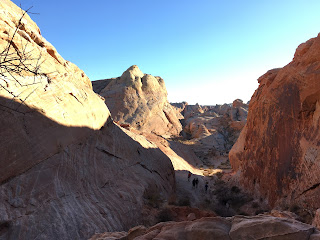
Valley of Fire State Park, NV

4.  Exploring the culinary scene of Northern Virginia (NOVA).

A calm Uzbek restaurant in Arlington and a seafood restaurant in Alexandria.

5. Getting stuck in Fairbanks in a historical "Icemageddon."

Canceled and delayed flights lengthened my stay from 4 nights to 6 nights. I handled an extremely volatile itinerary elegantly.

6. Long walks on cold Arctic winter temperatures of -34C, feels like -40C.

The weather app warned frostbites to exposed skin in 2 minutes and asked not to go outdoors. I did. I got a frostnip on my left thumb once too. 

7. Spencer Glacier and the blue glaciers of Whittier and surroundings

A scenic hike and standing in Spencer glaciers, and short walks in Whittier.

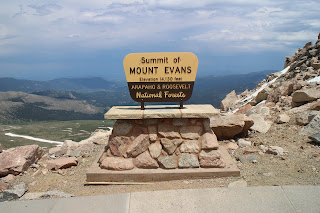
8. The view from Mount Evans, high at 4,348 m elevation

It is the highest I have ever been. And the scenic drive with mountain goats in the streets.

9. Arriving at Las Vegas, NV via long dark streets from Kanab, UT 

Slushies in Las Vegas was the weakest alcohol I have ever tried. 

10. The desert landscapes of NV and CA

Licked (!! because, why not?) some salt from the lowest elevations (-86 m) of death valley, and some hikes in the valley of fire, Joshua tree, and Mojave parks and forests.

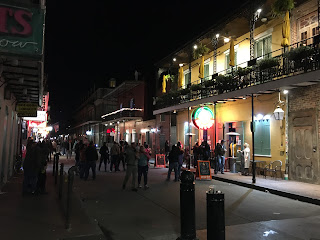
11. The French Quarter of New Orleans

It has this genuine European charm and nightlife that I haven't felt elsewhere in the USA.

Mount Evans, a Fourteener of CO.
12. Witnessing the bore tides in real-time from the train ride

From Anchorage towards the south, magnificent views of mudflats and glacier-covered mountains of Chugach National Forest.

13. 20 km frequent weekend walks in Atlanta Beltline west and south and Stone mountain trail

More explorations of South and West Atlanta; leisure walks in roadsides of various neighborhoods such as Edgewood, Cabbage town,  and College Park; and interesting mini hikes such as Doll's Head Trail/Constitution Lakes Park.

14. Disconnecting from the world in Charlotte.

Long weekend brief trips are fun. I liked the 7th Street Public Market.

15. EmoryBMI Google Summer of Code - a successful summer as a mentor for two projects and the org admin

Our sister organization caMicroscope had a productive summer too, I learned from their mentors. 

16. The 2 Pfizer shots and the Moderna booster

They gave hope for a year that overwhelmingly felt like a twin of depressing 2020.

Spencer Glacier in summer
17. Crossing the bridge to Camden, NJ from Philadelphia, PA.

Almost summer - but it was rainy and cold. Thankfully, Philly had some nice cafes.

18. Getting soaked in a heavy thunderstorm in Bonita Lakes Park in Meridian, MS.

The town has some ghost vibes, like a haunted town. I won't recommend walking alone there at nights. It is a ghost paradise.

19. Burgers and CBD water outside the Illegal Burger restaurant, Denver downtown
Met some interesting strangers in Denver/Colfax, Idaho Springs, Boulder, and Littleton.

20. Accepted journal papers - a productive year for research.

Niffler at Journal of Digital Imaging (JDI), NEXUS at IEEE Access, and Viseu at Elsevier Computer Networks (COMNET).

21. Regular dentist visits after a decade. It was expensive.

Since I did not spend considerable time with humans this year, my dentist became the person I most interacted with this year.

22. Exploring Washington DC with my former colleague.

It reminded our Atlanta walks pre-pandemic in 2020.

New Orleans French Quarter
23. Discovering Chungha's music and becoming a fan.

INNA, my all-time favorite since 2013 from Romania, also had some great music this year.

24. A colorful view from the apartment in central Portland.

It was a trip-inside-a-trip from Seattle in a serial trip. In such backpacking trips, especially including flights, packing-unpacking-and-repacking, ensuring not to mix the still-clean clothes with dirty/used ones, is an art.

25. Up and downhills of Seattle on rainy Thanksgiving days.

The Chinatown / International District was nice for a good walk, despite the bad weather.

26. Software-Defined Systems SDS 2021 Conference.

Nice to meet my peers, although it was virtual. I was also the technical program committee (TPC) chair.

27. Snow covered Christmas Eve in Anchorage

This was my first white Christmas, everything covered in heaps of snow and snowflakes falling occasionally. Loved that feeling. I used icicles to write Happy New Year on snow. 2021 was easily my most favorite and unique Christmas.

Walking across the frozen Chena River
28. Crossing Chena River on foot from Pike's Landing, College, AK.

To get a selfie with the "Love Alaska" sign on Christmas day. In the winter, this "path" is also known as "Ice Bridge" but becomes an actively flowing river when it gets warmer in spring to autumn.

29. Reading a book outside in the snow by the fireside in Fairbanks.

Thanks to the hotel's library and the beautiful view that the snow had crafted.

30. Dangerously slippery roads of downtown Fairbanks

Walked across the entire downtown Fairbanks on various types of snow, ice, and slush - The good traction for my long boots prevented me from slipping on the heaps of snow with ice layers.

Every year, I have one new year's resolution - to outperform my previous years. :) 2021 was not a bad year, and comparing it with my pre-pandemic years is unfair. It was better than 2020, and it was the best I could achieve solo in a pandemic. I expect 2022 to bring an end to this crisis and bring back happiness to the 2019 pre-pandemic level. I wish you a happy new year. Thanks for reading my list until the end. You may read the blog posts of all the previous years as well.

Tuesday, January 26, 2021

Google Summer of Code (GSoC) 2021

There are a few specific changes to GSoC this year compared to the past years. Specifically, workload and the student stipend have been made half in 2021. This change is highlighted as a direct outcome of the COVID19 pandemic and the challenges of committing full-time to GSoC during these unpredictable days. As such, we do not know yet whether these changes will remain the same in 2022 and later or will GSoC revert to its full-time commitment (35hrs/week) in the upcoming years. 

In the past years, the potential to commit full-time to GSoC was a major deciding factor. We would actively avoid selecting candidates who already have an on-going internship or a job unless they exhibit the potential still to commit the same amount of time and effort. However, since GSoC is officially part-time this year, I see the ability to commit full-time to GSoC is not a deciding factor. Mentors and student can even schedule their work hours the way they see fit. For instance, work full time for specific days or weeks, just making sure the deadlines are met.

Given below is an introductory presentation to GSoC 2021. Good luck!

Sunday, February 23, 2020

[GSoC] I am new here.. Help urgently.

Most of the time these questions come from students who are new to the organization, or open-source as a whole.

My suggestions:

Join the relevant communication channel/medium for your project. 

It is not necessary to post "I am X from Y. I am interested in caMicroscope". It is obvious that this is why you are here.

Read the project description and then ask specific questions if needed, with your interpretations. 

For most GSoC projects, the descriptions are often intentionally left somewhat "vague", not to hinder the students' creativity in building the solution and in the project proposals.

Please also do not abuse the Slack by overusing the tag features such as @here or @mentors_name. Someone will reply to you eventually. No need to ring the bell too quick, too often.

Also, always make sure to read the previous discussions on the channel. That will help with avoiding repeated questions while giving you the answers quickly.

[GSoC] Framing your questions correctly

There may be some shortcomings in open-source documentation. Feel free to seek help from the mentors. But make sure to give your best effort on finding them yourself first. Sometimes, they are there. Just you could not find it. Sometimes, the mentors have already provided the link to the documentation as an answer to another student in the mailing list or Slack. Make sure to go through the previous messages.

A serious turn off for me, when a student cannot find something - but they present it as a failure of the organization or the mentors. 

For example,
"How can I run your software? Your project lacks an installation guide!!". 

This is an actual message I received (paraphrased).

Such messages come across quite arrogant. Especially when the documentation is indeed there -- linked from the home page. The student just missed it! That's completely fine when a student fails to notice documentation and seeks assistance in locating it, except for the tone of the student in these messages (as if they found a huge shortcoming in the project).

The right way to frame this question without giving some attitude:
"Somehow I couldn't find the install instructions. Any help?"

I think GSoC students (actually any software engineering undergrad) need some training in communication skills. Not my responsibility as a GSoC mentor to teach communication skills to the GSoC candidates, especially in the application period when we are bombarded with candidates with a diverse range. Some great. Some so-so.

Being polite in your communication with the open-source community and the potential mentors helps a lot, especially in a competitive program such as GSoC. We want to find kind and pleasant people to work with. Not ones with an attitude. :)

[GSoC] Google Summer of Code Frequently Asked Questions

GSoC has its own Frequently Asked Questions. However, students always come up with more interesting questions that deserve a personalized answer. I decided to compile my own FAQs for GSoC based on my experience as a mentor and an org admin.

1. I am new here. Can someone help me, like now?

2. Can I have some advice on how to get started in an open source organization, and specifically as a GSoC student?

3. What if the project idea that I am working on doesn't get into the final list?

4. Is there a place where I can discuss with my fellow citizens in my mother tongue about GSoC?

5. I sent several emails and got a reply to only 3 from the mentors. Why not they reply to all my questions?

6. Can we apply to a project idea as a team or is it compulsory to be an individual effort?

7. My company is a GSoC organization now. Can I apply as a GSoC student with them?

8. Can I apply for more than one project?

9. Your project lacks documentation on how to install!!!


I will add more answers when I come across more questions.

Some answers may be subjective and reflecting based on the organizations that I have worked with (AbiWord/4 years, OMII-UK/1 year, Emory BMI/4 years, and caMicroscope/1 year).

Please also note that Google can change its policies each year. In case of a conflict, Google has the final say in the GSoC policies (obviously!). :)

Friday, February 21, 2020

caMicroscope in the GSoC 2020!

We have made it into Google Summer of Code (GSoC) 2020! This is the first year for caMicroscope as a GSoC mentoring organization. But we have an experienced bunch of mentors from previous GSoCs. Please view our project ideas at https://github.com/camicroscope/GSOC.


Friday, January 10, 2020

Stop the small talk if you need information

I hate small talk online and offline - especially when it doesn't go anywhere and performs zero information exchange despite consuming considerable time. This post talks about why I hate small talk online.

They: Hi
Me: Hi
They: How r u?
Me: Good, thanks, and you?
They: Good too. 

So what's next? Do I need to continue this chat? Note how I was the one who typed more characters above despite them starting the convo. Come to the point directly! I am not here to lead and drive the communication that you started (unless we are close and we know each other very well). If you are chatting online with me through LinkedIn, very likely there is a reason. You don't message someone without a purpose, especially a stranger -- that too using professional network platforms such as LinkedIn.

These days, if the message comes from an unknown youth, I cut them short to help both of us. 

They: Hi 
Me: Hi 
They: How r u? 
Me: Anything I can help with? 
They: I want to apply to GSoC. How to proceed? 

See, I have prevented that unnecessary bluff and waste of network bandwidth.

My suggestion to the youngsters, don't ask to ask. Just ask. If someone has responded to your chat/message, you have already achieved their attention. Most people have a little attention span. Don't lose that to small talk. Instead, come to the point instantly. Although chats are synchronous technically, they work more asynchronously in practice. I am not glued to my computer to slowly receive each piece of message and reply. But if you message the important/core communication at once in brief, it can get you the answer faster.

Often the below communication works better. Shorter and more to the point, but more complete than the previous 2.

They: Hi Pradeeban, I want to apply to GSoC with Emory BMI. How to proceed?
Me: Hi, Thanks for your interest. Please check https://github.com/sharmalab/Emory-BMI-GSoC

All it needed was just one single message exchange. Not three or more as in the second and first cases.

Thursday, December 19, 2019

Google Summer of Code (GSoC) 2020 for mentors

Google Summer of Code (GSoC) is a summer program hosted by Google where students work remotely on their favorite open source project and get paid! This presentation is an attempt to introduce GSoC to new mentors and mentoring organizations.

Wednesday, December 18, 2019

Google Summer of Code (GSoC) 2020

Google Summer of Code (GSoC) is a summer program hosted by Google where students work remotely on their favorite open source project and get paid! This presentation is an attempt to introduce GSoC to new students.
 

Saturday, November 2, 2019

Universities as mentoring organizations

A fraction of the session participants.
(Photo by akram9)
We had several exciting unconference sessions and talks at the Google Summer of Code Mentor Summit 2019. I proposed and coordinated the unconference session titled "Universities as mentoring organizations," the Sunday 20th of October 9:00 - 10:00 a.m., at the room "Studio-2" of Mariott Munich. We had around 25 active participants from multiple organizations, representing several universities from countries including the USA, Russia, Germany, and Brazil. We also had mentors from umbrella organizations such as CBioPortal, which are based mainly on universities and research labs. Later on the same day, I coordinated a session on "The great proposals" at "Studio-3" from 2:30 - 3:30 p.m.
 
The session notes are recorded in the GSoC notes. Find all the sessions with their notes linked here. In this post, I elaborate on the session "Universities as mentoring organizations" again for a wider audience. These notes are from the thoughts of the mentors from the communities involved in the discussion, and they will reflect the communities involved. Discussions are grouped under topics, rather than by the person who discussed it in detail.


Administrative Challenges from the Universities
The discussions started interactively with self-introductions from the participating mentors and their mentoring organizations. Tiago and Frederico represented their mentoring organization, which is a university in Brazil. They noted the challenges in convincing the university administration to join the GSoC and then accepting payments from Google. Their organization was the first Brazilian university to become a GSoC mentoring organization. The university administration was expecting documents from Google in Brazilian Portuguese to consider them official. The universities expected the supporting documents could come from one of Google's Brazil offices rather than from Mountain View to make the language requirement met. This expectation created some translation requirements, and these cause some additional burden on the GSoC organization administrators. We hope that such issues would be sorted out from the universities, potentially with some help from Google, so that there would be more participation from International (i.e., non-English-speaking) universities as mentoring organizations.

GSoC Students Help Ph.D. Research
There were several observations on how GSoC students help with the implementation of research ideas. Several Ph.D. implementation works remain closed due to implementations with significant technical debt. Support from GSoC helps make the code more readable and reusable, and thus support open science and open-source contributions from the research universities. Hence GSoC students help with the host universities' research open-source. Stephanie from UC Santa Cruz stressed how GSoC helped their Ph.D. and postdoc researchers. She mentioned how the undergrad GSoC students worked with their researchers, and this was a mutually benefitting task. No one felt mentoring as a burden. Instead, they saw it as a way to build their communities. She highlighted that promoting GSoC across the departments would be easy by stressing how the GSoC students help with implementation over the summer, paid by Google. There were observations on developing projects that are helpful to Ph.D. research work. For instance, there are projects that need to get done, but the mentor (Ph.D. student) doesn’t want to do it themselves. GSoC students can be more motivated to do such implementation work, even with little scientific or research impact.

Motivating students into GSoC
Philipp and Karlheinz represented the University of Munich. They highlighted that their Ph.D. students work as GSoC mentors. However, they also stressed that it is hard to motivate students from their university to join GSoC as students due to summer holidays overlapping with the GSoC timeframe. Students do go off on a well-deserved vacation rather than taking a summer internship. Furthermore, there were observations that there are several university open source projects that are not connected to or well-received by general open-source software communities. GSoC is indeed bridging this gap, making the code quality better. I (Pradeeban from EmoryBMI - Emory University, Department of Biomedical Informatics) mentioned how we motivate our students to join GSoC while discouraging them from joining our university/department as their mentoring organization. This is mainly because we want them to build new collaborations. Collaborations inside the university or department do not require a GSoC.

GSoC in professional life
The impact of GSoC is long-lasting. Some of us found our postdoc advisors and employers through GSoC. So GSoC works as a recruiting platform for mentors as well. Furthermore, it fosters international collaborations between universities. We had research papers as outcomes of the GSoC. Nikita from a Russian university stressed the importance of GSoC and similar programs in the students' careers. Sebastian Diaz from Harvard highlighted the misalignment of university projects and open source.  While challenging, programs such as GSoC help fill this gap. Tobias highlights that their target students mostly include Ph.D. students, as they are more suited to work on the proposed projects, involving significant research component. GSoC also helps them get more funding for full-time developers, as it is considered a full-time job for the students.

Best Students Join the Universities
Aadi, a high school student from India, observed how the best students like to work with the universities that function as GSoC mentoring organizations, as this helps them with their future graduate studies and research. The observation is that the mentors from such organizations are professors and experienced researchers from the universities. This is also a mutually beneficial relationship - universities as mentoring organizations get to have the best students. Indeed, a win-win. I joined OMII-UK as a student in 2010 and Emory BMI in 2014 and 2015 (2016 onward as a mentor and then joined 2018 as an employee, and 2019 a postdoc). My interest for OMII-UK was driven by the fact that the EPCC research team from Edinburgh University was part of OMII-UK, where I worked with them on their OGSA-DAI platform for GSoC 2010.

Why not enough open-source from universities?
Arav Singhal, a student from Rice University, stressed he prefers more open-source development in his university. We agreed that a large number of research teams keep their source closed until their paper is published. Even after that, when the code is made public, most of the time, the code is not reusable, as it is usually developed as a prototype with little attention to code readability and engineering best practices. GSoC helps fix this by building up coding skill sets in the students.

Small open source presence in a country
Deniz is from Turkey. He was a GCI student in ScoReLab (an open-source community originated from the University of Colombo, Sri Lanka). He highlighted how Turkey has a small open-source presence. The lack of local open-source communities makes motivating students to join GSoC harder. The challenge starts with introducing open-source and then GSoC, among the potential students. It is essential to create larger local open source communities to build a diverse expanding FOSS contribution.

Universities/Entities collaborating as a single mentoring organization
Werner highlighted the collaboration between multiple universities as a mentoring organization. He observes that sometimes, organizations do not make it explicit enough that the organization is a research department or a collaboration of such entities. Ino from cBioPortal highlighted how hospitals and research institutes collaborate under cBioPortal for the GSoC. He also noted the positive outcomes, including peer-reviewed publications. Mentioning GSoC in CV - both as a student and a mentor - is rewarding. There were suggestions on including open source software development in university curriculums.


Starting a new GSoC organization
Akram, a researcher from the University of Tennessee (Dept. of Bioinformatics), helped his department apply and get selected as a mentoring organization as a new (i.e., first-time) GSoC organization when he moved to the current university as a postdoc from another university. He observes that the GSoC has indeed resulted in peer-reviewed journal publications. He stressed the importance of open source for university. There seems to be a common observation that receiving funding from Google (or any similar company) becomes harder due to the university regulations. We discussed how to start as a mentoring organization. We need to have precise project ideas. Of course, having established open source projects would be a big plus. However, there are also concerns about having mentors and retaining them. How to grow our mentoring community beyond the walls of the department/university? GSoC students-turning-mentors can be a solution. We also need to be clear on the bioinformatics side on what can be open source, as we deal with sensitive health data.

Recruiting Mentors
One challenge to address is how to leverage more departments/mentors from the university. Some of us view it as building the community. This requires a significant effort from the organization administrator, to convince the fellow faculty, postdocs, researchers, and staff to be GSoC mentors. Sometimes, it is faster just to do the development ourselves, rather than mentoring a student to do it. However, such mentoring can be a rewarding experience for early career researchers. We all agreed that GSoC was a productive use of our time and not overhead. We also need a "mentor pool." Projects should have back-up mentors and an active co-mentors. This helps with avoiding mentor burn-out, ensuring successful completion of GSoC.

GSoC as a funding mechanism
Some view GSoC projects as a way to fund implementation activities that other funding entities won’t financially support. For instance, development is often seen as not novel. Therefore, complete implementation and maintenance efforts do not receive sufficient funding from the funding agents. However, such maintenance and incremental developments are crucial for the usability of the project. GSoC helps improve the usability and maintenance of the code.


Did we miss anything? Also, did I fail to include any crucial aspects discussed in the session? Please share your thoughts on this topic as comments.

Saturday, October 26, 2019

Google Summer of Code Mentor Summit 2019

The mentor summit in full swing
This is the first time the Google Summer of Code (GSoC) mentor summit came outside of the CA/USA, and the first time to Europe. The mentor summit was in Munich this year, and I am back to the summit after 8 years. Last time I represented AbiWord in 2011 in GooglePlex (the GoogleHQ in MountainView, CA, USA). This time, the Department of Biomedical Informatics, Emory University as both the primary organization administrator as well as a mentor. We traveled from Atlanta to Munich for the mentor summit. I am a happy participant of GSoC for 10 years, under various capacities - student, mentor, and organization administrator. I have been with AbiWord, OMII-UK, Emory BMI between 2009 - 2019.

As the mentor summit was in Munich, Google had organized it longer than usual. Usually, the mentor summits were just 2 days. This time, it was 3 days. The first day was a free day for social activity: a visit to Nymphenburg Palace, followed by a scavenger hunt. The remaining 2 days were the actual mentor summit. The format did not change at all, after almost a decade. It was unconference, where we propose our own topics in a post-it note among the available 8+ slots per session. Then folks join a session that they are interested in (or propose a session of their own). This time I coordinated 2 sessions. The first one was on "Universities as mentoring organizations" and the other one was on "The great proposals". The first one had active participation from around 25 mentors, with most of them representing a university or an umbrella organization formed by universities. The second one was a session I coordinated as the last session of GSoC, mostly because the only other session was "Fail your students," and I did not want to end the mentor summit on a negative note.

I enjoyed coordinating the 2 sessions as well as attending some exciting sessions in all the slots. Of course, I missed several sessions that I would like to participate as I can be physically present in only one session in any given timeslot. I met several mentors from multiple mentoring organizations. We also had a few free days in Europe since the mentor summit was just 3 days, and we were in Europe for a week. We used those days to explore Germany, Austria, and the Baltic nations. Quite a packed trip, indeed.

It was a rewarding experience to attend the mentor summit and proactively contribute to the summit. I made connections with many of the mentor summit participants. Please keep in touch, if you are one of those who attended the mentor summit. :)

Wednesday, September 11, 2019

Younger Siblings of GSoC

There is a younger version of GSoC aiming at school students (age 13 - 17). Format is different. It is more of a contest of several small tasks. I mentored once for Haiku OS. If you feel bored during the weekends now that the GSoC is over, consideer to apply to be an organization. ;)
https://opensource.googleblog.com/2019/03/reflecting-on-google-code-in-2018.html


and another interesting one that happens in October. https://hacktoberfest.digitalocean.com/faq
HacktoberfestHacktoberfest
Open source is changing the world – one pull request at a time.(209 kB)

^ The format is simple. Organizations register with their github profile and tag a few issues as "Hacktoberfest". Then students can pick up and resolve those issues with PRs. The student who completed 4 PRs receive a tshirt.

and a December version of it - https://24pullrequests.com/

24pullrequests.com24pullrequests.com
24 Pull Requests is a yearly initiative to encourage contributors around the world to send 24 pull requests between December 1st and December 24th.(44 kB)


.. and if you want to give yourself or someone else a certificate, here is the tool that Google/GSoC uses - https://github.com/google/certificate-maker
google/certificate-maker
An experimental tool for turning HTML templates into PDF files.
Stars
68
Language
JavaScript
<https://github.com/google/certificate-maker|google/certificate-maker>google/certificate-maker | Jan 30th | Added by GitHub

Sunday, March 10, 2019

[GSoC] What if the project idea that I am working on doesn't get into the final list?

I have received this question in the past and recently. I decided to post my answer as a blog post for future references.

A student asks, "There are like 11 project ideas for your organization. Based on my observation, I see that you have received only 4 - 6 final projects accepted, despite having 10+ project ideas. Now I work hard for a project idea, and what if you guys decide not to select the project idea because that idea is not important to your organization? Will my hard work go wasted? So is this pure luck?"

I decided to leave a detailed answer as the primary organization administrator for GSoC/Emory BMI.

tl;dr: Work on your project idea and be the best. Avoid worrying about the selection process.

The long answer: One thing I can assure is, most GSoC organizations select students. Not project ideas. As much as I know, GSoC organizations (including us) don't list project ideas that are not the priority to them. That means, all the ideas have near-equal priority (of course, there will be minor variations among the project priorities).

In the worst case, I have experienced in the past once when 2 of the best students apply to the same project, the mentors tried to encourage the 2nd best student to apply for another project in the same organization. Every organization is different, and every mentor is different. So don't quote me on this with another organization.

Wearing my ex-GSoC student hat, my advice to current potential students is, try to be the best among the organization's potential applicants. Remember you also can apply for up to 3 projects if you are worried a lot. I have been a GSoC student 4 times successfully (now you can be a student only twice. But those days, no such limitation).  2 out of 4 times, I applied to more than one project. During my first GSoC as a student (2009), I applied for 2 projects in the same organization. The mentors choose one project  that was the most relevant for them among the 2, I applied. In 2014, I applied to 3 different organizations and 2 chose my proposal (and of course in that case, mentors try to contact you to find your first option, or sometimes agree upon themselves which organization should accept you. You can of course work on only one GSoC project at a year. No exception).

Now, my only worry as an organization administrator that Google may not give the maximum number of slots we (open source organizations) want. Google has a limited budget and a number of students in mind. It is around 1000 students. Therefore, many organizations do not get the number of students they want. Of course, we always can ask for one additional slot than they offered. But still, there is no guarantee. I ***guess*** we will get 4 - 5 slots this year. But that is just a guess. But I strongly believe, we will get at least 2 slots. Definitely not possible to get 11 slots. That means, some of our ideas won't have students working on them as a result. But that is life. ;)

To answer your comments on the discussions in Quora on GSoC: Take them with a grain of salt. Many of them i) are subjective, ii) plainly wrong despite their high up-votes iii) often come from someone who has never been a student or a mentor, iv) based on limited experience, or v) outdated as GSoC has changed its rules during the past 15 years.

Now, stop worrying and focus on working on the project ideas. Optimism and hard work go a long way! Make sure to do your research and show your talents to the mentor. We can only choose one student for a project idea, and naturally, that goes to the best candidate.

Sunday, March 3, 2019

Google Summer of Code: The best of both worlds - II

Google Summer of Code (GSoC) is an exciting program dedicated to open source projects, funded by Google. I have been a student 4 times - 2009 with AbiWord, 2010 with OMII-UK, 2014 and 2015 with Emory BMI. I have been a mentor 4 times too - 2011, 2012, and 2013 with AbiWord and 2016 with Emory BMI. After a short break, now I am happy to be the primary organization administrator for Emory BMI - my first time as an organization administrator, my 9th year of involvement with GSoC. In this post, I plan to share a few suggestions to the potential students.

 While I have written several posts in the past on this topic, several things have changed recently. Most importantly, now the students can do a maximum of 2 GSoCs in their lifetime as a student. There was no such limit during those days, and some of us ended up with 4 or more years as GSoC students. This change means, if you have been a GSoC student twice before (for example, GSoC 2016 and GSoC 2018), you cannot be a student anymore. That means I can never be a GSoC student again. :P Second, previously there were only 2 evaluations. Now there are 3. 2016 and before, everyone received the same stipend. Now, it depends on the country of your university (most likely this is your resident country). Also, you can apply only up to 3 projects now. Previously this upper limit was higher (It was reduced from 20 to 5, and eventually became 5). The reduced limit aims to favor quality instead of quantity.

The beauty of open source projects come into play that it gives you a chance to work on something that you are interested in, in your way. But not many of us get time to dedicate to an open source project due to our other commitments and as we are busy with our regular work, study, and related activities. Now let's come to the topic.

Why GSoC?

GSoC is an annual program from Google for the university students of age 18 and more. Each student codes for her preferred open source organization for 3 months. Google coordinates and awards the successful students. Though open source organizations are run mostly by volunteer developers, Google pays the students. The exact money you will get depend on the location of your country, varying between 3000 $ - 6600$. For example, if you study in Portugal, the total you will get is 4200$. If you study in Sri Lanka, this will be 3000$. You will also receive a certificate, an awesome t-shirt, and some small gifts! Hence you can focus entirely on the program during the 3 months.

3 milestones. 
    • First Evaluation (paid ~July 1): 30%
    • Second Evaluation (paid ~July 29): 30%
    • Final Evaluation (paid ~September 5): 40%

      Some statistics of 2019
      • 206 Organizations
      • Expecting more than 2000 mentors and co-mentors.
      • Expecting more than 1000 successful students.

      The success rate is pretty high!
      Historically, 1 in 4 students gets accepted to GSoC. That means, for every 4 complete project proposals, 1 got selected. Once the student is selected, the chance of her completing the project successfully is much higher. In the past years, the success rate was around 85 - 90% for the students who are accepted. The high success rate is because the mentors and the organization are with the student to provide him assistance and guidance, whenever is needed.

      The passion for open source and the desire to be an outstanding student are considered to be the primary reasons for a student to participate in the Google Summer of Code. Not forgetting to mention, earning money for the summer.

      A computer with the Internet connection, knowledge and experience in the domain, and the motivation are the required to participate. Of course, you should be interested in contributing to the particular open source organization.

      Don't forget to check the timeline and adhere to it strictly.

      Before you begin..
      • Google Summer of Code is all about being Open Source.
        • Get your basics and motives right.
      • Netiquettes.
      • Sign up to the mailing lists (if any).
      • Join the relevant Slack/IRC channels (if any).

      Technologies
      • Version Control Systems
        • These days, it is mostly Git. But this depends on your organization.
      • Build Tools
        • Mostly Maven.
      • IDEs (Integrated Development Environments)
        • IntelliJ IDEA, Eclipse, Microsoft Visual Studio, ..
        • Of course, specific to the programming language
      • Issue Tracker
        • GitHub, Jira, Bugzilla, ..

      Communicating with the team..
      .. and the mentor, over the Internet..
      • Slack or Internet Relay Chat (IRC)
      • Mailing Lists
        • Dev, User, Commit lists, sub-groups, ..
      • Issue Tracker
      • Forums and wiki
      • Blogs
      • Only if the mentor proposes - Skype, Personal Mails, gtalk, conference calls, ..

      Network Etiquettes
      • Be Specific and clear.
      • Research (google.. ;) or Go through the previous Slack/mailing list messages) before asking.
      • Be helpful to others.
      • Be ethical; respect.
      • NO CAPS! (UNLESS YOU ARE SHOUTING!)
      • Don't take messages personally.
      • Dn't snd ur sms msgs to thrds or lsts.

      Proper Addressing..over the lists/irc/..
      • Address the devs and users properly.
        • First Name or Preferred calling name.
        • No excuse not knowing the mentors' names. Mentors' names are listed under the project descriptions.
        • NO Sir, Madam, bro, sis, pal..
          • Even if you know them, personally.
          • Especially, don't say "Dear Sir/Madam". Can be perceived as too pretentious, lazy, or impersonal.
        • No Mr., Dr., or Prof. either.
      • Be gender neutral.
        • “Folks” over “Guys and Girls”.
      • Not too personal.
        • “Hi” is preferred more than “Dear”.

      Mailing lists
      • Post only to the relevant list.
      • Check the mail archives first.
        • To avoid getting RTFW/RTFM responses.
      • No [URGENT]/[IMPORTANT] tags.
      • No unnecessary attachments.
      • No Cross Posting.
        • Stick to the proper mailing list only.
      • Don't hijack threads.
      • Don't post off-topic.

      IRC/Slack Etiquettes
      • Be a reader first when you enter a Slack channel. Check the previous discussions before asking a question. Most likely your question is already answered. I know, "No question is a bad question". But remember, you are being evaluated for GSoC slots (Even if we want to mentor all of you, we cannot. GSoC gives only a certain number of slots to each organization, and mentors have limited time too). You don't want to come across as someone who is lazy.
      • Refer to others using their irc/slack nick.
        • Whenever my irc nick is mentioned, I get a pop up message from my irc client such as pidgin.
        • Don't use @channel in your message at all. This will send a notification to everyone. You don't want to send a message "@Channel, I have submitted my proposal".
      • Don't expect immediate replies; wait.
      • Avoid these common mistakes.

      Find a mentoring organization..
      • More than 200!
      • Find the organization you like the most.

      Find THE right project..    
      Once you have found the right organization(s), that matches your interest and expertise, you have to go through the ideas list (e.g.: the project ideas of Emory BMI). You can apply up to 3 projects in total - either from the same organization or from 2 or 3 organizations.


      Get to know more about the projects
      • Talk to the mentor(s) Assigned by the organization for each project idea.
        • Use the recommended channels. 
        • Avoid the temptation to send private emails, LinkedIn messages, private Slack messages, etc. These are not going to help you. Use the appropriate public channels (unless advised by your mentor otherwise).
      • Mailing lists and archives.
      • Issue Tracker
        • Open issues or tickets
          • New features/enhancements (RFE)
          • Bugs (easy/difficult and normal/critical)

      What makes you special?
      • Experience
        • Being a great user doesn't mean that you can be a good developer.
        • Demonstrate your ability to perform the task with prototypes and bug fixes.
        • Possess the required skills.
          • If you have no clue about C, you will be unlikely (although I sound negative to say this) to get selected for a project that requires expertise in C. Better luck applying for a project that you know the development language and the tools.
      • Complete the prerequisites for the project and additional requirements related to the project proposal from the mentors.
        • The prerequisites such as a screenshot/video of a working deployment/demo/prototype, pull requests, or some prototype code are there for some reason. Don't ignore them if you want to be considered seriously.
      • Your interests and motivation
        • Pick something you enjoy doing.
        • Being a great developer doesn't mean that you can be a good contributor.
        • What makes you the right person?
      • Willingness to contribute to the community beyond the time frame of GSoC. 
        • Usually, Open Source organizations want committers and longtime volunteers - Not just students!
      Experience
      • Languages
        • Java, C++, C, ..
        • Not much time to learn a new language (?)
      • Prove It with pull requests to existing bugs or feature requests in the code base!
        • Submit well-tested and complete pull requests. Don't send half-baked pull requests that won't even compile or breaks a functionality. Remember, you are consuming the mentor's time who might be answering up to 100 of students (depending on the popularity of their project ideas). Also, for most of us mentors, GSoC is just a part-time activity or a hobby. It is not our full-time job (in contrast, the selected students are expected to consider GSoC as a full-time job during the 3 month coding period).
        • Assist other students!!!
        • Project expertise
          • Bug reports and fixes.
          • Go through the archives, wikis, and web sites.

      Opportunities..
      • A project that matches your previous work experience.
        • Choose the right project.
      • Timezone Difference 
        • Use it effectively - Most students prefer to work in nights too, as they may have lectures in the mornings.
      • Multiple Applications (3!) If you apply for multiple projects, make sure all of them are of high quality. Remember the equation of quality vs. quantity.
      • Communicate early and often.
      • Be heard, visible, responsive,  and quick!
        • Ask questions, and more importantly answer others' questions.

      Apply

      Register as a student for GSoC, as the first step of the application procedure. Make sure to follow the deadline and submit the application and the student proof such as a transcript or student ID indicating that you are currently an active student (as important as the GSoC proposal, as far as Google is concerned) on time. No execuses and no exceptions. If you miss the deadlines set by Google, your mentoring organization cannot help you, even if they want to. Share your draft proposal with mentors early on, and iterate over it with the mentors' feedback.

      Apply on Google's site, at the earliest possible, as you can edit it later, until the last minute. Check often for the mentors' comments and attend to them. Only the organization mentors can see your proposal unless you decide to make it public. Please don't wait until the last minute to submit the proposal and the other necessary documents. There will definitely be a powercut or an Internet outage right at the deadline. I have warned you. ;) Submit early and continue editing. That's the approach.

      How to impress the mentors/developers?
      • Stick to the organization's template.
      • Abstract.
      • Introduce yourself properly.
        • Focus on the relevant facts.
        • Why do you fit? Your skill sets.
        • List of the pull requests or patches (if any) you have submitted. Make sure to identify the working/accepted ones.
      • Project Goals
        • Proves you got them correct.
      • Deliverables
        • Code, documentation, test cases, binary releases, ..
      • Description - can also be given along with the timeline
        • Benefits to the organization and other projects  
      • Timeline
      • Links - References and additional details.

      After the submission..
      • Don't go invisible!
        • Evaluation is still going on.. ;)
      • You may be asked to provide additional information.
        • Pull requests, prototypes, demos, patches, ..
        • Screenshots.
        • A Skype Interview request from the mentors!!
      • Start coding on your project - if you have time and of course it will help in the selection process (It is going on once you have submitted).
      • Be motivated.

      Got Selected? Community Bonding Period!!!

      Don't panic. You have 3 more weeks, just to mingle with the developers and the code base. Mentors are there to help you! Keep touch with the developers and users. Learn the project by going through the code base and documentation such as coding styles and coding guidelines. This will help you understand the project idea more. Come up with a design and start with simple hacks.

      Coding

      Finally comes the coding - the easiest task of all. Commit often, if you are given committership. When committing or sending pull requests or patches, make sure to include meaningful Commit messages. Get feedback from the mentor(s) on your commits or patches frequently. Keep the community updated. Committing or sending patches daily would be a good approach.

      Plan for the 3 evaluations early, with the mentor. This will help you reach the target successfully. You might also need to revisit the project goals if required, during the milestones.


      Conclude/Continue

      Whatever coding or related job done on your project after the GSoC deadline will not be considered part of your summer of code, and will be considered a volunteer work on the project. Try to stick around your project community after the successful completion of your GSoC. You can aim to be a committer, long-term contributor, or even a mentor for GSoC next year.